
A literary invisibilization mirroring the history of science
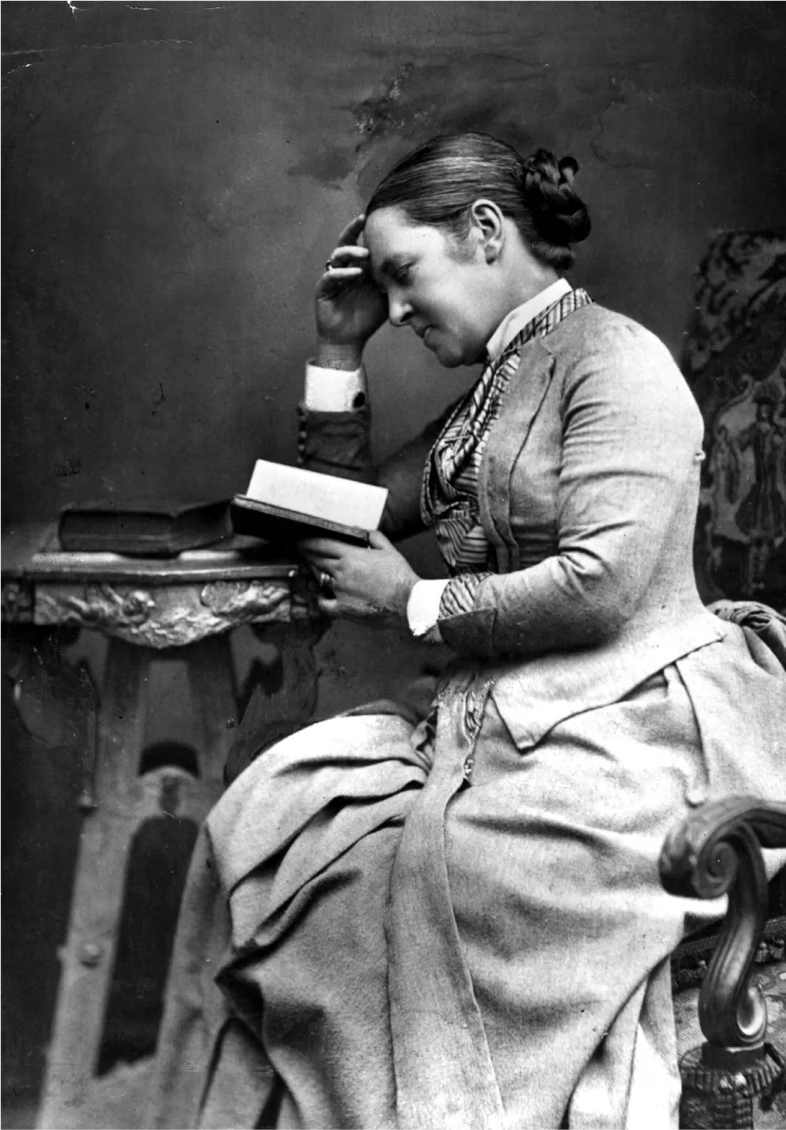
For centuries, literature has poorly represented women scientists. Their absence from romantic narratives, textbooks or biographies reflects a historical reality: that of a systemic exclusion of women from the spheres of research, academic recognition and the transmission of knowledge.
Youth literature, educational and pedagogical lever
It is in youth literature that this dynamic is most marked. Illustrated albums, comics, novels for teenagers feature historical figures such as Marie Curie, Katherine Johnson or Ada Lovelace, but also fictional heroines passionate about tech and research.
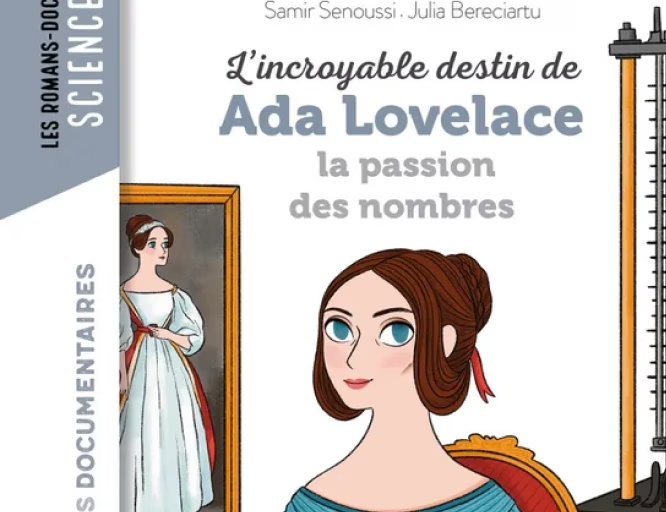
These works, often accompanied by educational resources, play a crucial role in building representations from an early age. They allow girls to project themselves into scientific careers and boys to recognize women's contribution to progress.
READ MOREFrom biography to fiction: a memory under reconstruction
From the 1980s onwards, a turning point occurred. Authors, historians, journalists and novelists seized on these forgotten destinies to bring them back to life through literature. The biographical genre becomes a true tool of rehabilitation. Figures like Ada Lovelace, pioneer of the analytical engine, are the subject of numerous works, as are Rosalind Franklin, Lise Meitner or Émilie du Châtelet, long marginalized in traditional scientific narratives.

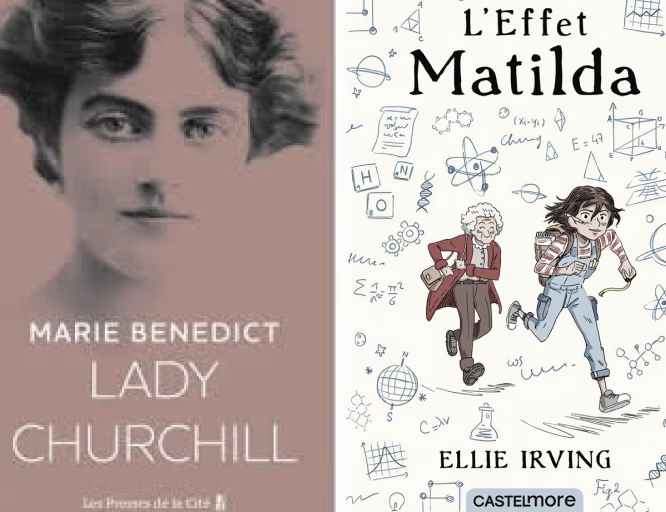
Fiction also takes hold of it. Novels like "The Woman Who Knew Too Much" (Marie Benedict) or "Les calculs sauvages" (Catherine Dufour) imagine narratives where women scientists are at the heart of the plot, mixing algorithms, discoveries and struggles for recognition. These works allow the transmission of scientific knowledge while raising awareness of gender inequalities.
READ MOREA memory in motion
Literature thus becomes a space for memory, transmission and repair. It helps to inscribe women scientists in the collective imagination, to value their knowledge, and to deconstruct stereotypes that still hinder equality in scientific careers.
By giving voice to those who have been forgotten, literature contributes to a critical rereading of the history of science. It becomes an educational and engaged tool, serving a more just and inclusive society.
READ MORE