🇫🇷 FR

Who is Ada Lovelace

Ada Lovelace, a pioneer in search of meaning

Ada Lovelace (1815–1852) grew up in a Victorian society that did not destine women for science. However, her unique journey, between mathematical rigor and poetic imagination, led her to become the first programmer in history.

written by Khaoula and ChatGPT, October 20, 2025

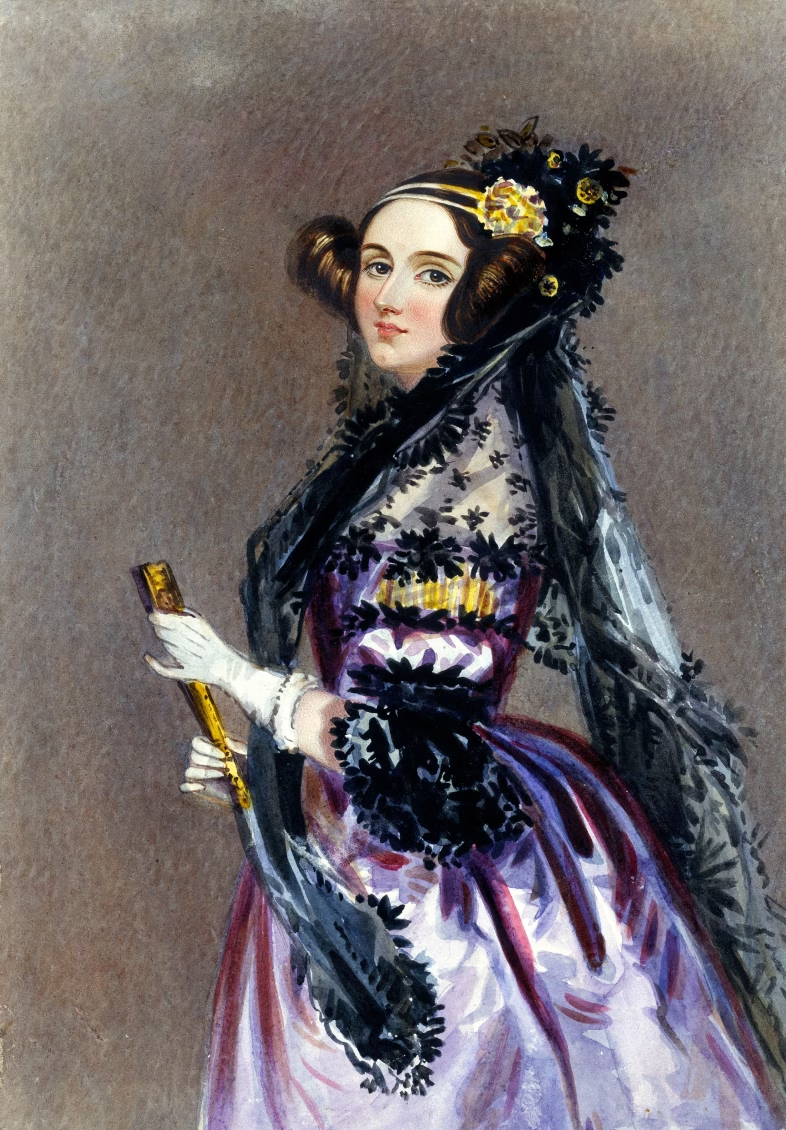
Painted portrait of Ada Lovelace.
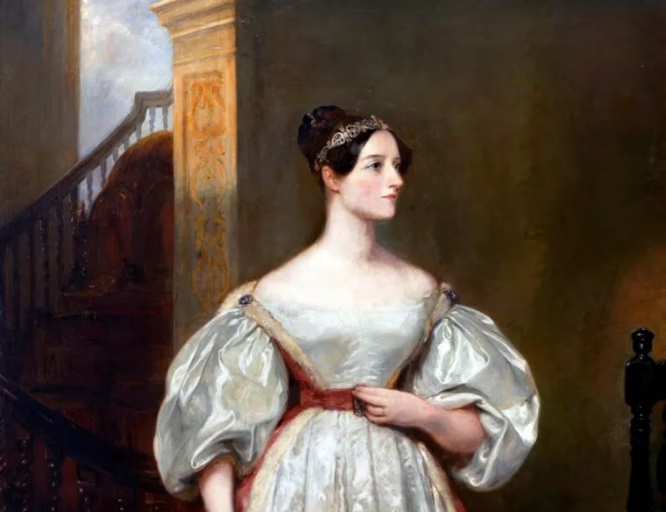
Portrait of Ada Lovelace by Margaret Sarah Carpenter, 1836

A Scientific Youth

Born in London on December 10, 1815, Ada Lovelace grew up under the influence of her mother, Lady Anne Milbanke, who imposed a strict education in mathematics and logic. This kept her away from the romantic influences of her father, the poet Lord Byron. Ada developed a passion for numbers and abstract ideas, which she described as a "poetic science".

READ MORE

The Meeting with Charles Babbage

At 17, Ada met Charles Babbage, inventor of the Difference Engine. This meeting marked the beginning of a decisive intellectual collaboration. Ada became the first to glimpse the idea of computer programming, particularly through her work on the Analytical Engine, a concept for a universal machine capable of manipulating symbols. She was also influenced by figures such as Mary Somerville, a pioneer in science, with whom she exchanged ideas.
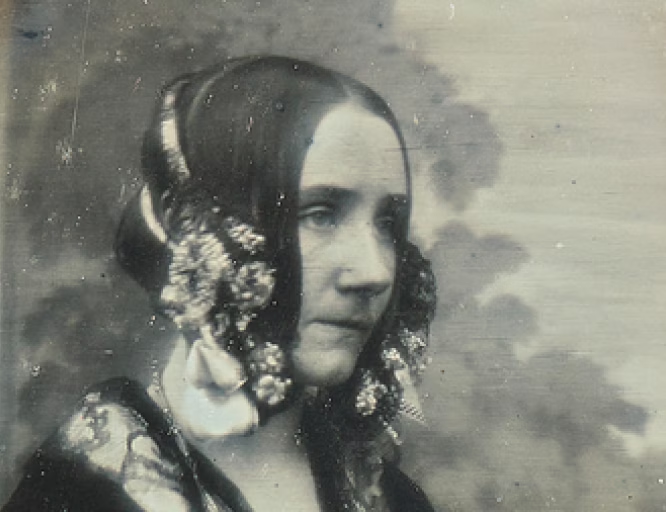
Daguerreotype portrait of Ada Lovelace.
Ada Lovelace, daguerreotype by Antoine Claudet circa 1843.

A Visionary Legacy

Despite a premature death at 36, Ada Lovelace left an essential legacy in the field of science and computing. Her work fell into oblivion for a century before being rediscovered in the 1950s, affirming her role as a pioneer.

READ MORE
The First Program

In 1843, Ada Lovelace wrote what is today considered the first computer algorithm. A visionary discovery, born from mathematical intuition and collaboration with Charles Babbage around the Analytical Engine.

written by Khaoula and ChatGPT, October 20, 2025

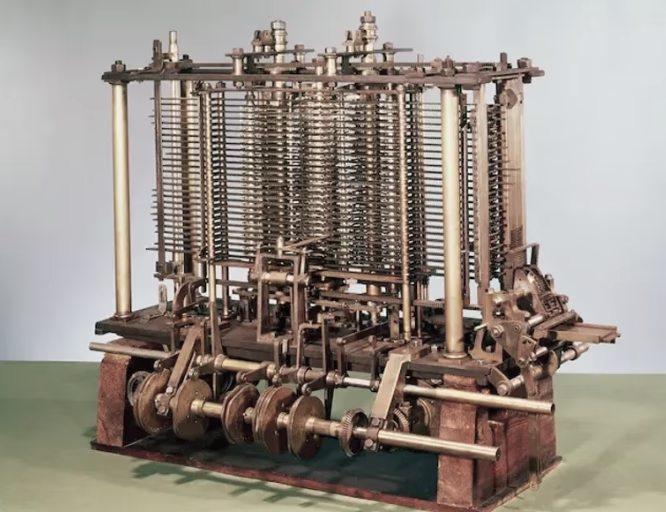
Photo of Charles Babbage's Analytical Engine.
Charles Babbage's Analytical Engine, 1840

A Visionary Heritage

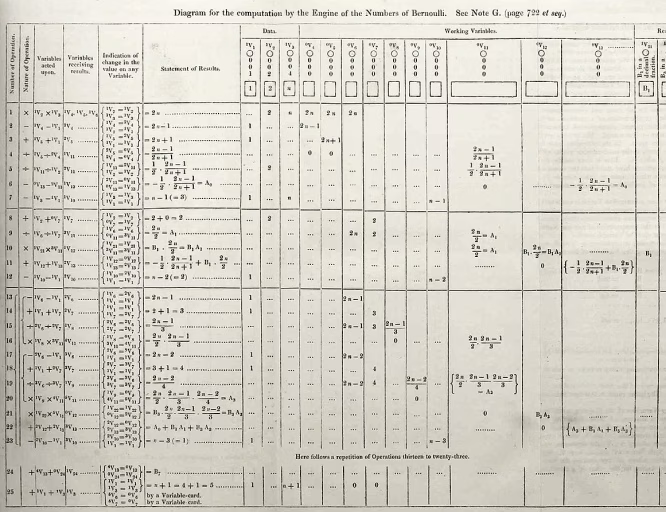
In 1843, Ada Lovelace wrote what is now recognized as the first computer algorithm, while translating an article by Italian mathematician Luigi Menabrea on Charles Babbage's Analytical Engine. During this translation, Ada added seven annotations, which tripled the size of the original text, presenting a revolutionary idea: a series of instructions allowing the machine to calculate Bernoulli numbers.

Photo of Ada Lovelace's notes on the Analytical Engine.
Ada Lovelace's "program" for calculating Bernoulli numbers (1843).

The First Computer Algorithm

This program is the first to be designed to be executed by a machine. Ada already anticipated the potential of machines to go far beyond simple calculations: she imagined that they could one day compose music, manipulate letters or images, a prophetic vision of modern computing.

Her reasoning, called the Lovelace objection, highlights an essential limit of artificial intelligence: a machine cannot create new analytical relationships on its own, it only follows instructions. This reflection is still at the heart of debates on AI.

READ MORE
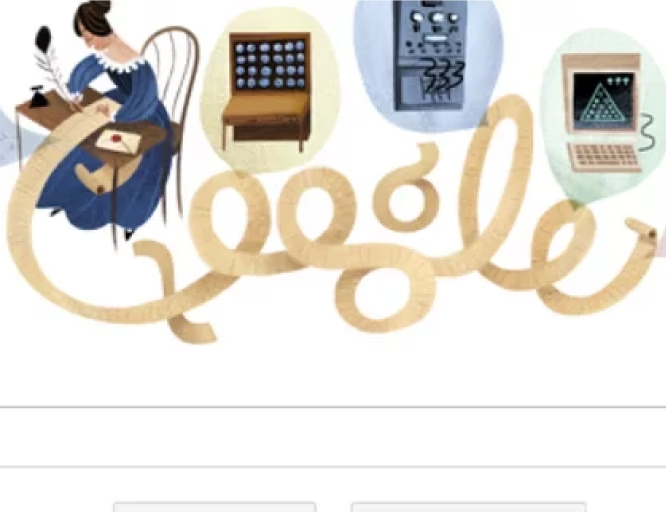
Tribute to Ada Lovelace by Google Doodle on December 10, 2012

A Lasting Legacy

Ada Lovelace's notes were rediscovered in 1953 and influenced the creation of the Ada programming language by the U.S. Department of Defense in 1979. Today, her work is considered the foundation of programming, introducing key concepts such as loops, conditionals, and symbolic logic.

Ada Lovelace is recognized as the first programmer, but her story also echoes a broader phenomenon: the invisibilization of women in science and technology, a phenomenon that researcher Isabelle Collet calls "the forgotten women of digital technology".

READ MORE